Italian saddles, made for racing since 1897.
Selle Italia
From everyday transport saddles in 1897 to the Flite, SLR and idmatch, Selle Italia has spent more than a century shaping how riders sit on a bike.
- Founded
- 1897, Corsico (Milan)
- Headquarters
- Casella d'Asolo, Veneto, Italy
- Known for
- Flite, SLR, Novus, idmatch fitting
Born in 1897
Selle Italia began in 1897 in Corsico, a village just outside Milan. At the time the bicycle was how most Italians got around, and the company's first saddles were built for exactly that: everyday riding to work, to market and between towns. Leather stretched over a steel frame was the standard, and it stayed that way for decades. The job was simple but unforgiving: a saddle had to survive years of daily use on rough roads.
A new direction
In the late 1970s the Bigolin family took over the company and turned its attention to performance. New materials and construction methods followed in quick succession, replacing heavy leather-and-steel designs with lighter shells, padding and rails. The Turbo became a fixture in the professional peloton through the 1980s, with Bernard Hinault among its best-known riders, and it established Selle Italia as the saddle maker racers asked for by name.
The Flite and what came after
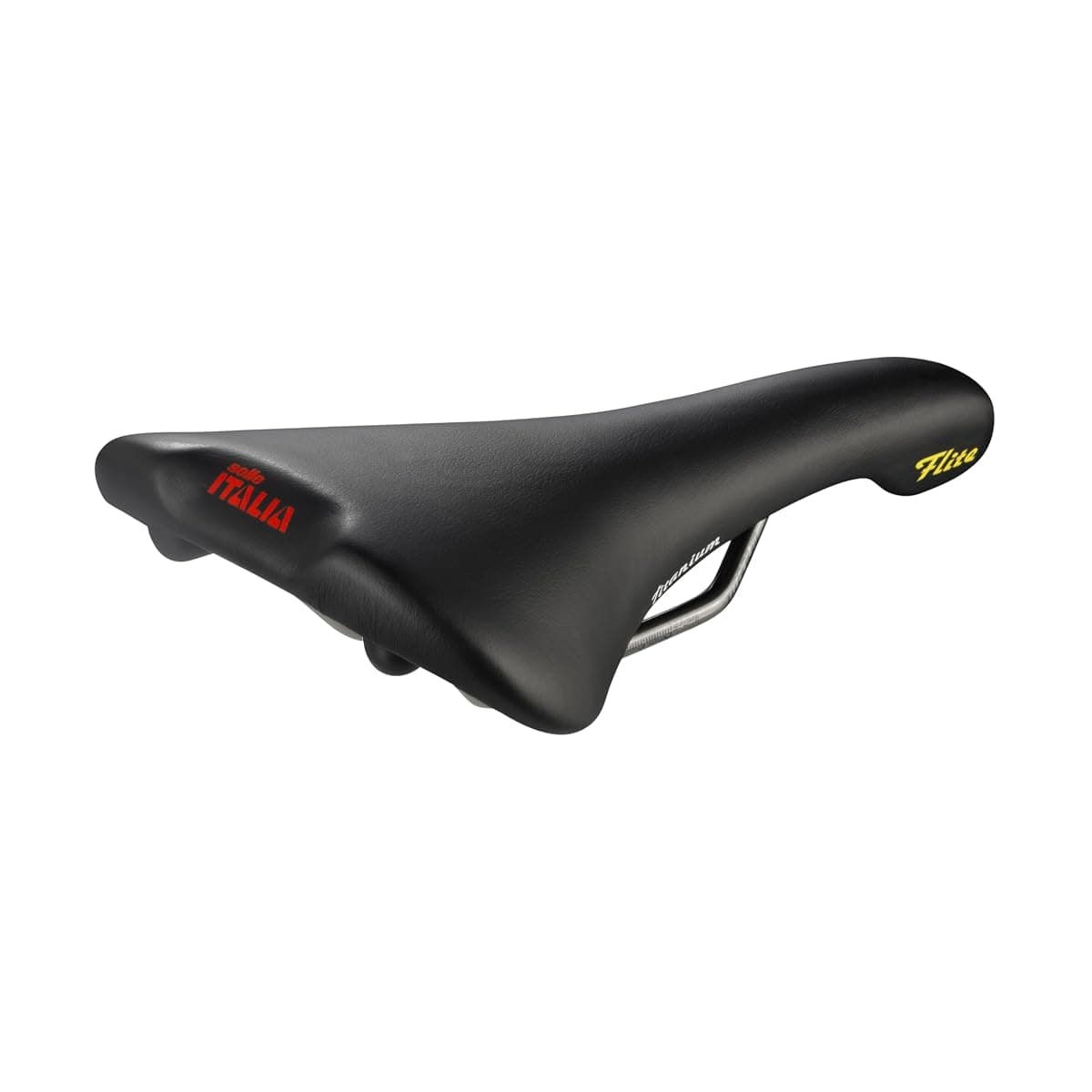
In 1990 the Flite arrived: slim, flat and light, with a low profile that set the template for the modern racing saddle. It is still in production more than three decades later. In 1994 came a titanium-railed Flite and the Novus, a curved, ergonomic saddle developed with Ferrari Engineering. Riders from Marco Pantani to Mario Cipollini raced on Selle Italia, and the company kept pushing weight down and comfort up with the SLR and the Superflow cutout, which relieves pressure on soft tissue.
Fit, measured
Selle Italia's idmatch system brings the same thinking to saddle choice. Working with doctors and biomechanics specialists, the company developed a fitting method that measures each rider instead of guessing. A trained fitter measures the width of the sit bones and how far the pelvis rotates forward on the bike. The result is a simple code: S or L for sit-bone width, and 1, 2 or 3 for pelvic rotation. Every current saddle is labelled the same way, so a rider who measures L3 can walk straight to the saddles made for them.
Shorter, lighter, greener
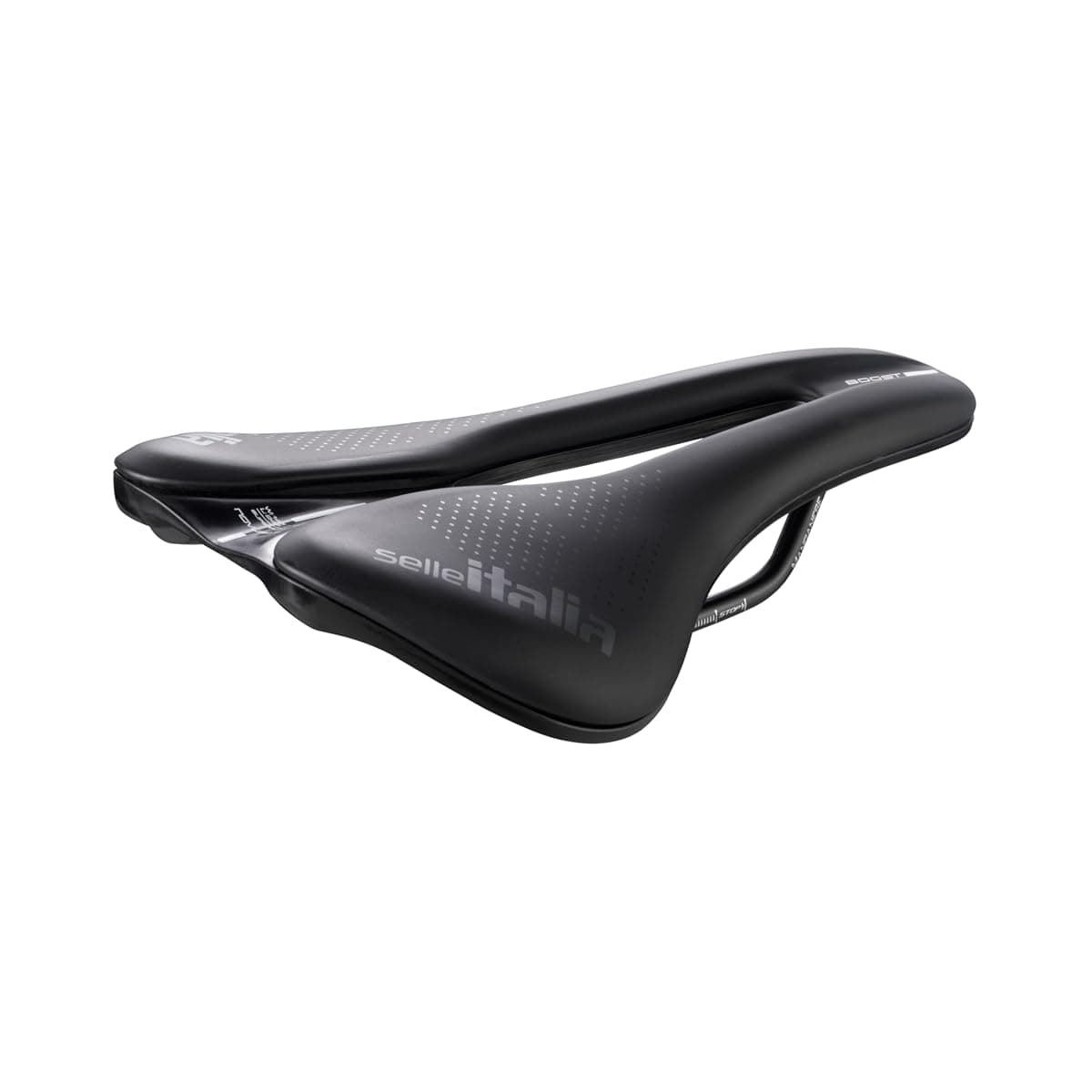
The idmatch research also shaped newer designs. The Boost range shortens the nose of classic shapes like the SLR, Flite and Novus, which frees up room for the thighs, suits a low riding position and trims weight. Green-Tech, a production approach introduced across entry models, cuts material and energy use and keeps manufacturing close to the company's home in the Veneto.
Today
More than 125 years on, Selle Italia still designs and tests its saddles in Italy, from laboratory work to long days on the road with riders. Its name has appeared on professional team jerseys, including Farnese Vini-Selle Italia, and its saddles remain a common sight in the pro peloton. The goal hasn't changed since 1897: a seat that lets you forget about it and get on with the ride.